Interview Prep

5 minute read


4 minute read
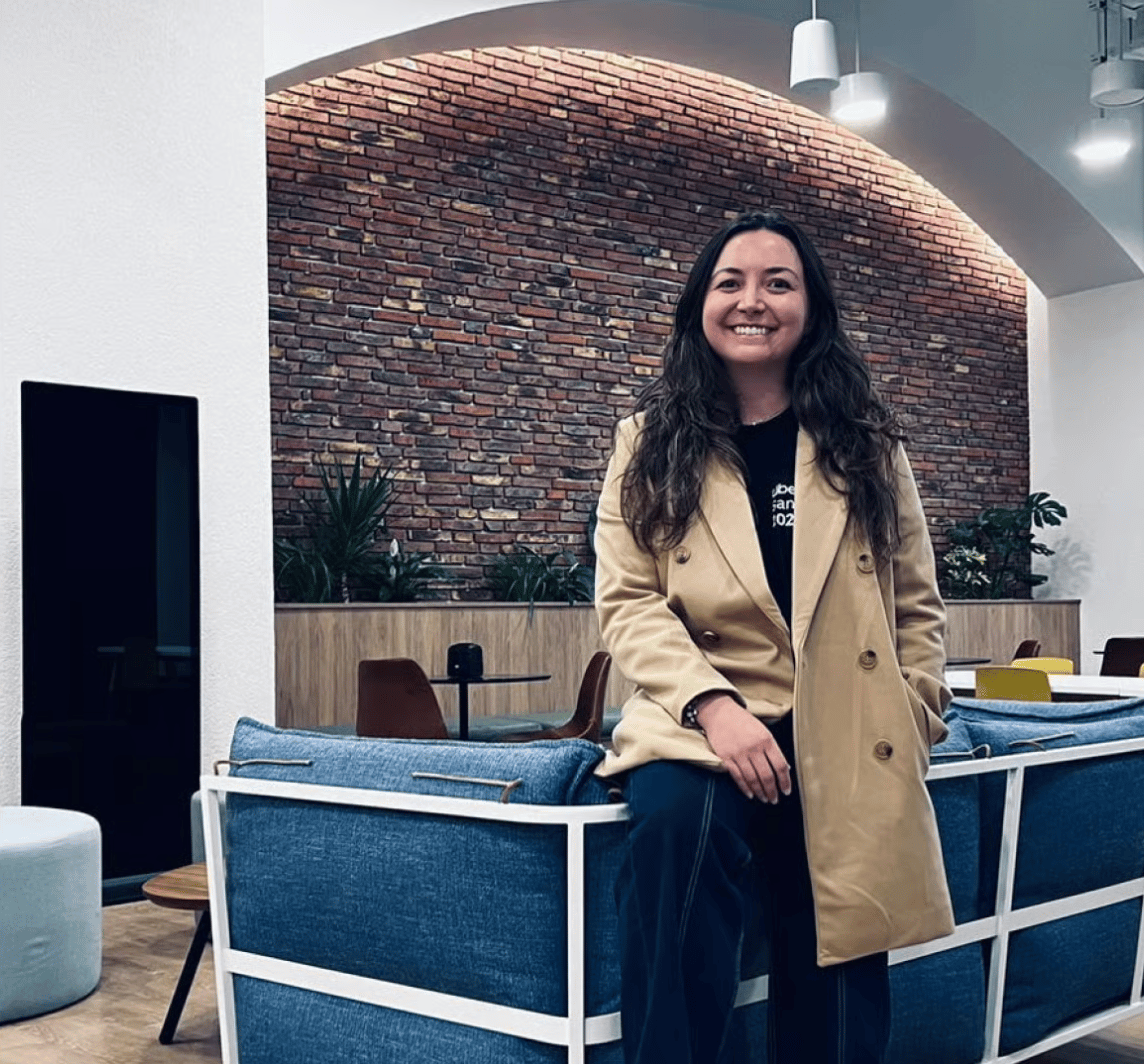
Isidora Vizcaya is a Software Engineer II who started her Uber journey in the Santiago Tech Center and recently relocated to San Francisco. She shares what motivated the move, how she navigated the transition, and what she’s learning as her scope and community expand in a new office.
Meet Isidora, a software engineer on the Shopping Experience team at Uber. She joined a little over two years ago in Santiago, Chile, and recently relocated to the San Francisco office.
“Our team owns the restaurant storefront, cart, and checkout experience on Uber Eats, which covers the shopping funnel from when a user adds an item to their cart through placing an order.
A typical week changes depending on the projects I’m working on. I might be building user-facing features, working on engineering excellence and platform improvements, doing design reviews, answering support questions, resolving user-facing bugs, or being on call. Since our systems are also a foundation for other teams, it’s a mix of building new things and helping keep the platform reliable at Uber’s scale.”
“When I joined Uber, I started on the Checkout Experience team as the only engineer in Chile. The rest of the team was in the U.S.
Coming from a local startup, joining Uber was a huge change in terms of scale. Even though Santiago is a smaller hub of about 100 engineers, the work is completely global. I learned to work remotely with teams around the world, communicate clearly across time zones in my non-native language, and build ownership from a smaller tech site.
I’m especially proud of the technical impact I was able to have from Santiago. I led international expansions of exciting features, and I also worked across multiple surfaces, for example, bringing Uber Eats experiences into the Rides app.
I’m also proud that I got to share that work in different spaces: with teams in Santiago, external visitors, universities in Chile, and eventually internationally as a speaker at Grace Hopper Celebration, where I spoke with a teammate about the challenges of working with very large and complex codebases.
That chapter taught me that being in a smaller tech site does not mean having smaller ownership.”
“The decision was mainly driven by family reasons, but there was also a strong career opportunity behind it.
I reached out to a former colleague from my first team at Uber, and the domain they were working on was very similar to my experience. They were looking for an engineer at my level, so I talked to the manager and applied for the role.
Personally, it felt like the right moment for a change. Professionally, moving to San Francisco felt like a way to experience a different tech environment and be closer to where many industry conversations are happening.”
“Relocating is exciting, but it is also very hard. You are closing a life in one country and starting from zero in another.
Uber supported me a lot throughout the process, especially with immigration, financial support, and clear guidance on what I needed to do before leaving Chile and after arriving in the U.S. That made a big difference because there are so many details involved in an international move.
Even with that support, moving felt overwhelming at times. I had lived my whole life in Santiago, so I was not only changing offices or roles. I’m still rebuilding my routine, my community, and my sense of home. Having support from my family and friends has been very important during the transition.”
Since arriving in San Francisco, what’s changed most about your day-to-day work, such as scope, pace, stakeholders, or technical challenges, and what’s stayed surprisingly similar?
“The work itself is similar in terms of scope, pace, stakeholders, and technical challenges. That’s the great thing about the Santiago Tech Center. It shows that from Chile, we have the opportunity to work at the same global scale and technical level as teams in larger offices.
The biggest change is physical proximity. I now have more spontaneous, in-person conversations with my team, and I feel more connected to the team’s energy.
I’m also closer to the tech ecosystem in the Bay Area. It feels different to be in a place where so many conversations are happening around technology, engineering, AI, and the future of the industry. Being in San Francisco, at Uber’s headquarters, also means being closer to the people and conversations shaping the direction of engineering. It’s very motivating to be in rooms where you can hear directly from the CTO, the head of engineering, or other leaders.
So the work did not become global when I moved. It was already global from Santiago. What changed was the environment around me, and that has opened a new kind of growth.”
“Just one week after I arrived, my org paused business as usual for an AI immersion week. Meetings were reduced, projects were paused, and the whole org focused on workshops and figuring out how to make the most of the AI tools the industry is adopting.
What I enjoyed most was seeing that everyone was learning together. Engineers at all levels were exploring how to make these tools a natural part of their work. People were sharing what worked, what didn’t, and what they were trying, in workshops, meetings, and even at lunch.
The way we build software is changing rapidly. As engineers, we need to adapt and keep learning to stay on top of where the industry is going. For me, that week made something I already knew feel much more real.”
Moving cities can also mean rebuilding community. How have you found belonging on your team and in the San Francisco office, and what helped you feel connected quickly?
“It helped a lot that I already knew some teammates, and that I had Chilean friends who had already relocated to the Bay Area. San Francisco is a very diverse city, with people from all around the world, and I’ve enjoyed connecting with people who have many different perspectives and backgrounds.
Everyone has been very welcoming, especially with recommendations for neighborhoods, places to eat, and things to do. After living my whole life in Santiago, I feel more settled after three months, but I’m still figuring out many things. I think that is part of the process.”
“If the opportunity is there, I would say it is very worth considering.
At the same time, I don’t think you need to relocate to grow. My experience in Santiago gave me global-level work, ownership, and impact. Uber in Chile is one of the few tech sites where you can work at this level of engineering while being based in Latin America, and I’m very thankful for that. Relocating did not feel like starting over. It felt like taking what I had built in Santiago and bringing it into a new environment where I could keep growing.
My advice would be to talk to the new team, understand how they work, and ask what life in that city is really like. The work matters, but your life outside of work will change too. Most importantly, be open to uncertainty. Moving countries is challenging, but for me, it has also been very exciting.”